
Daycare Security Cameras: A Buyer's Guide

We may earn a commission from links on this page. Our disclosures

A daycare security camera setup starts with one camera in every classroom, then adds the entrances, the front desk, the hallways, the playground and the parking lot. Count those spots and you have the number of channels your recorder needs. A small home daycare often fits a 4-channel system, a small center an 8-channel one, and a center with several classrooms a 16- or 32-channel system.

This guide walks through how to count, which camera types fit which rooms, where cameras must never go, who gets to see the footage, and what a few states require. It also includes a sample video policy you can adapt.
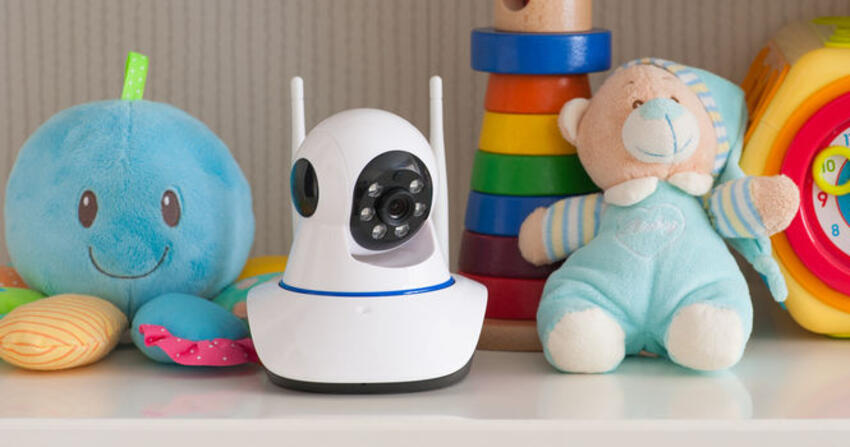
Small white indoor Wi-Fi camera on a shelf next to stuffed toys

What 4, 8, 16 and 32 Channels Mean

A channel is one camera feed. A 4-channel recorder records four cameras at once, an 8-channel recorder eight, and so on up to 32. The recorder is one of two kinds:

  • NVR (network video recorder): works with IP cameras connected by network cable or Wi-Fi. Choose this for a new install.
  • DVR (digital video recorder): works with analog cameras on coaxial cable. It makes sense mainly if your building already has that cable in the walls.

Buy more channels than you need today. Adding a camera to a recorder with a free channel is a small job. Adding one to a full recorder means replacing the recorder.

ChannelsUsually fitsExample layout
4Home daycareFront door, play room, backyard, 1 spare (a video monitor can cover the nap room)
8Small center with 1 or 2 classrooms2 classrooms, entrance, front desk, playground, parking lot, 2 spares
16Center with 3 to 6 classroomsEvery classroom plus entrances, front desk, hallways, playground and parking, with 2 or 3 spares
32Center with 7 or more classrooms, or more than one buildingEvery room, hallway and outdoor zone, with 2 or 3 spares

How to Count the Cameras You Need

  1. List every room children use: classrooms, nap rooms and any indoor gym or play room.
  2. Add each door people use to come in or leave, plus the front desk or sign-in spot.
  3. Add the hallways that connect those rooms.
  4. Add the playground and the parking lot or drop-off lane. A large yard may need two cameras to see the whole fence line.
  5. Give a large or L-shaped classroom a second camera if one angle leaves corners out of view.
  6. Add spare channels for rooms you open later: at least one for a home daycare, two or three for a center.

For example, a center with four classrooms, one nap room, two entrances, a front desk, two hallways, a playground and a parking lot needs 12 cameras. A 16-channel recorder covers that with four channels left over.

Camera Types for a Daycare

Camera typeWhere it fitsWorth knowing
DomeHallway ceilings, and classroom walls on a wall bracketThe dome hides which way the lens points and is hard to knock out of position.
BulletPlayground, parking lot, long hallwaysAims at one area from a distance and mounts easily on a wall.
PTZ (pan-tilt-zoom)Large rooms, or a director who watches liveSomeone can steer and zoom it. Set it to fixed positions in classrooms so it is not sweeping over staff all day.
Doorbell cameraFront entranceShows who is at the door and lets staff talk to them before opening it.
Floodlight cameraParking lot, back door, dark corners of the yardTurns on a light when it senses motion, which helps after hours.
Video baby monitorNap room in a home daycareBuilt for watching live on a handheld screen. Check whether it records before you count on it.

For classrooms, mount the camera high on a wall or in a corner, whatever its type. A wide-angle view from there shows more of what hands and faces are doing than a camera pointing straight down from the middle of the ceiling. Save ceiling mounts for hallways.
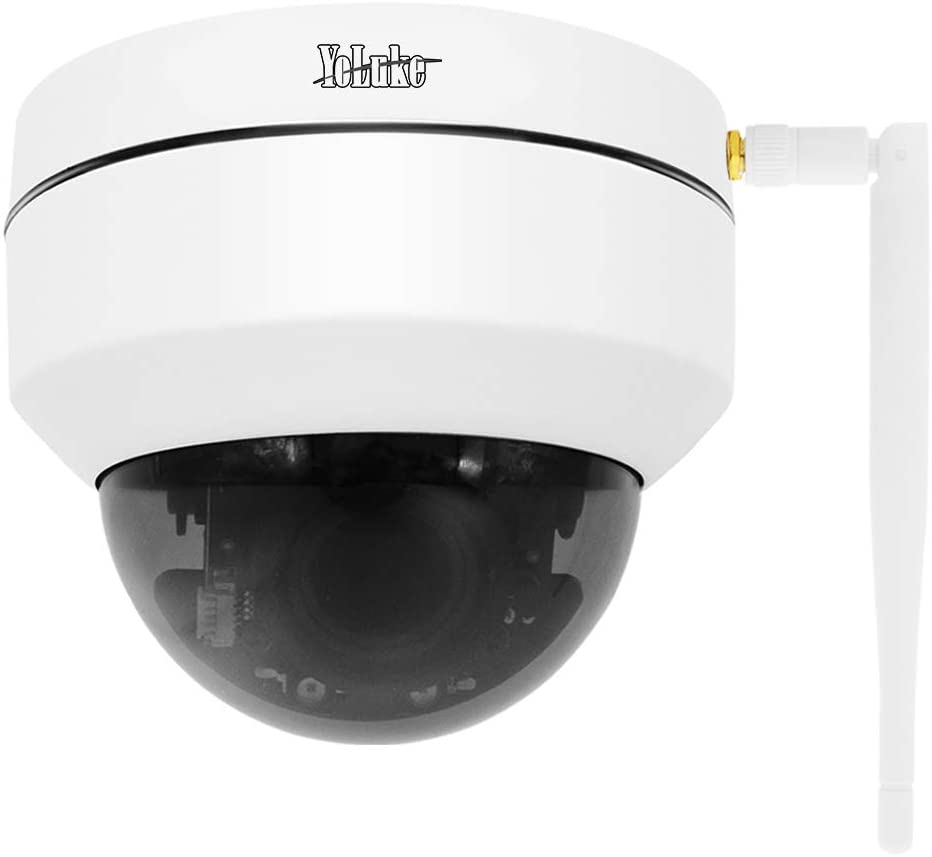
White dome-style Wi-Fi PTZ security camera with an antenna
A dome-covered PTZ camera. The dome hides which way the lens is pointed.

PoE or Wi-Fi?

PoE (Power over Ethernet) cameras get power and send video over a single network cable, and many NVRs supply that power from ports on the back. For a center, PoE is the steadier choice: no batteries to swap and no Wi-Fi dropouts. Wi-Fi cameras skip the video cable but still plug into an outlet, and a dozen of them streaming at once can slow the same network your office computer and check-in tablet use. Wi-Fi is fine for a home daycare with a few cameras. For a center, run cable where you can.

Local recording or cloud?

A local recorder keeps footage on a hard drive in your building. You pay for it once, and nothing leaves the building unless you turn on remote access. Cloud cameras upload video to the maker's servers. That protects footage if the recorder is stolen or damaged, but it often adds a monthly plan for each camera and sends video of children off-site, so read the privacy terms before you sign up. A local NVR with remote access limited to the director's account is a sensible middle ground.

What to Look For in a Daycare Camera System

  • Picture quality: Minnesota's daycare camera law, covered below, sets 720p and 15 frames per second as its minimum. 1080p makes faces easier to recognize.
  • Accurate date and time: every recording should carry a correct time stamp. Check the recorder's clock after a power outage.
  • Storage and retention: set the recorder's retention period to match your state's rule, and size the drive to hold that much footage. The rules differ: Connecticut requires centers that record to keep video for at least 30 days, while Minnesota requires centers covered by its law to keep routine footage for 28 days and then delete it, with exceptions covered below. The drive size you need depends on camera count, resolution and frame rate, so use the maker's storage estimate.
  • Night vision: infrared lets you see a nap room with the lights off.
  • Separate user accounts: you decide who can watch, and you can check who viewed what.
  • Audio you can switch off: many cameras record sound. Treat audio as a separate decision and ask your attorney before you turn it on.

Cameras are one line on a longer safety list. Our daycare equipment list covers the rest, from fire extinguishers to first aid kits.

Video Monitors for Nap Rooms and Home Daycares

A video baby monitor is a camera plus a screen, made for watching live. In a home daycare, it lets you see sleeping children in the nap room while you are in the next room with the others. It cannot do the job of a recording system in a center with several classrooms. Size that system with the steps above, and see our roundup of wireless camera systems for childcare centers.

Two cautions. A monitor never replaces supervision: New York's rules for day care centers, for example, say cameras "may not be used as a substitute for competent direct supervision of children". And a monitor is only evidence if it records, so check whether a model saves video before you rely on it.

Below are recent camera and monitor deals from Gazoobie, priced as of the date shown under them. They tend to be single cameras and video monitors rather than full recorder systems, which suits a nap room, a home daycare or the front door. For a center, size a multi-camera system with the steps above before you buy. You can compare more options in the electronics deals on Gazoobie.

Camera and baby monitor deals

Deals from Gazoobie: AI-Curated Online Deals & Promo Codes. Checked October 8, 2026. Prices change.

Where Daycare Cameras Should and Should Not Go

Good places for cameras:

  • Every entrance and exit
  • The front desk or sign-in area
  • Each classroom and nap room
  • Hallways between rooms
  • The playground
  • The parking lot and drop-off lane

Never put a camera in a restroom or a diaper-changing area. New York's day care center rules, for example, allow cameras in common rooms, hallways and play areas only, and require that "bathrooms and changing areas must remain private and free of all video surveillance equipment." We also suggest keeping cameras out of staff break rooms.

Never hide a camera, either. Tell staff and parents where every camera is, and post signs at the entrances. Cameras that everyone knows about protect your staff as much as the children.

Are Daycares Required to Have Cameras?

In most states, no. A 2024 report from Connecticut's Office of Legislative Research found that no state required cameras in child care settings, citing a search by the National Conference of State Legislatures. Since then, Minnesota has added a narrow requirement. Four examples of how states handle it:

  • Texas: the state's minimum standards for child care centers say a video or audio monitoring system is allowed but not required. The same standards list closed-circuit cameras as one way to keep every child and caregiver observable, and note that many incidents of abuse in child care happen when one caregiver is alone with a child and out of view.
  • Minnesota: starting July 1, 2026, Minnesota Statutes section 142B.68 requires cameras only at licensed centers that must post a maltreatment investigation memorandum. Those centers need at least one camera in every infant and toddler room, recording whenever the center is open, at 720p or better and 15 frames per second. Routine footage must be kept for 28 calendar days and then deleted, unless an exception applies.
  • Connecticut: state law directs the Office of Early Childhood to require centers that make video recordings to keep them for at least 30 days and to hand them over right away when the office asks.
  • New York: cameras are optional, but centers that use them must tell parents, staff and volunteers where every camera is and must let state inspectors view the system.

Rules change, so check your own state before you buy. The federal National Database of Child Care Licensing Regulations has a profile for each state with the licensing agency's contact details and current rules.

Who Can See the Footage

Decide this before the first camera goes up, and write it down. Here is who may ask, with an example of a rule that applies:

WhoWhenExample rule
Director and assistant directorAs their job requiresMinnesota requires procedures that limit access to staff whose work needs it, and a log of every time recordings are viewed or shared.
Licensing staffOn requestConnecticut and New York both require centers to give the state access.
ParentsAfter an alleged incident involving their childIn Texas, a parent may inspect available video of alleged abuse or neglect involving their child. The center must first notify, in writing, the parents of any other child in the video, and the parent may not keep any part showing another child.
Staff memberWhen facing discipline based on the videoMinnesota requires that the employee be given access to that evidence to respond.
Police or courtsWith a court order, warrant or subpoenaMinnesota requires centers to release recordings in those cases.

Use footage to find out what happened and settle it fairly for everyone. Directors can also use it to coach staff. Never use it to embarrass a child or an employee, and do not let copies leave the building except as the law requires.

Should Parents Get Live Access?

Some families will ask for a live view on their phone, and it can be a selling point. It also puts other children and your staff on a screen you do not control. Anyone can screen-record a clip and post it, and a shared password can end up with people who were never enrolled.

Our view: most small centers are better off without parent streaming. If you do offer it, New York's rules make a good checklist. They require centers that stream to tell parents and staff, to keep internet security in place at all times (frequent password changes, filtering that blocks public access, and fast action on any misuse), and to remind parents that other children on the screen have privacy rights too.

Sample Daycare Video Surveillance Policy

A written policy should cover at least the points Minnesota requires of centers under its camera law. They make a good checklist anywhere:

  1. The days and times the cameras are in use.
  2. Where every camera is.
  3. How long you keep recordings and how you delete them.
  4. Who may view recordings, and when.
  5. How you keep recordings secure, including staff access.

Give parents the policy at enrollment and post a sign at each entrance. Minnesota's required sign wording works as a model: "Video security cameras are present to record persons and activities."

Below is a short sample for a parent handbook. Adapt it to your center and your state's rules, then have an attorney review it. Our legal guide for small childcare businesses covers when to bring one in.

To help keep children, staff, parents and visitors safe, [Center Name] uses a video surveillance system. Cameras are in classrooms, hallways, the kitchen, the outdoor play area and the parking lot. There are no cameras in restrooms or diaper-changing areas. Recordings are kept for [number] days and then deleted. Only the director and assistant director may view recordings or live video, and every viewing is logged. We share recordings only when the law requires it, such as with licensing staff, with law enforcement under a court order, or with a parent who has a legal right to review an incident involving their own child. To protect the privacy of every child and staff member, parents may not otherwise view or copy video.

Adapt the same policy for your employee handbook, and add it to your parent registration forms.

Daycare Camera FAQ

Q:

Can parents watch daycare cameras live?

Only if the center chooses to offer it. If yours does, ask how access is controlled. New York, for example, requires centers that stream to use password and access protections and to remind parents about other children's privacy.

Q:

How long should a daycare keep camera footage?

Follow your state's rule, because a state can set a maximum as well as a minimum. Connecticut requires centers that record to keep video for at least 30 days. Minnesota requires centers covered by its law to keep routine footage for 28 calendar days and then delete it, unless an exception applies: footage of an incident the center must report is kept for six months, and no video may be deleted once law enforcement says it is investigating a suspected crime against a child at the center. If your state sets no rule, choose a period, put it in your written policy and apply it every time.

Q:

Can daycare cameras record audio?

Texas licensing standards allow a video or audio monitoring system without requiring either. Recording conversations is a separate legal question from recording video, so ask your attorney before you turn audio on.

Q:

Is a baby monitor enough for a home daycare?

For watching a nap room live, often yes. For a recorded history of the day, you need cameras that record. Check your state's licensing rules either way.

Q:

Do I need to post signs about cameras?

Some states require notice. Minnesota requires a sign at each visitor entrance for centers covered by its law, and New York requires centers to tell parents, staff and volunteers where cameras are. Posting signs is good practice everywhere.